
Full Description
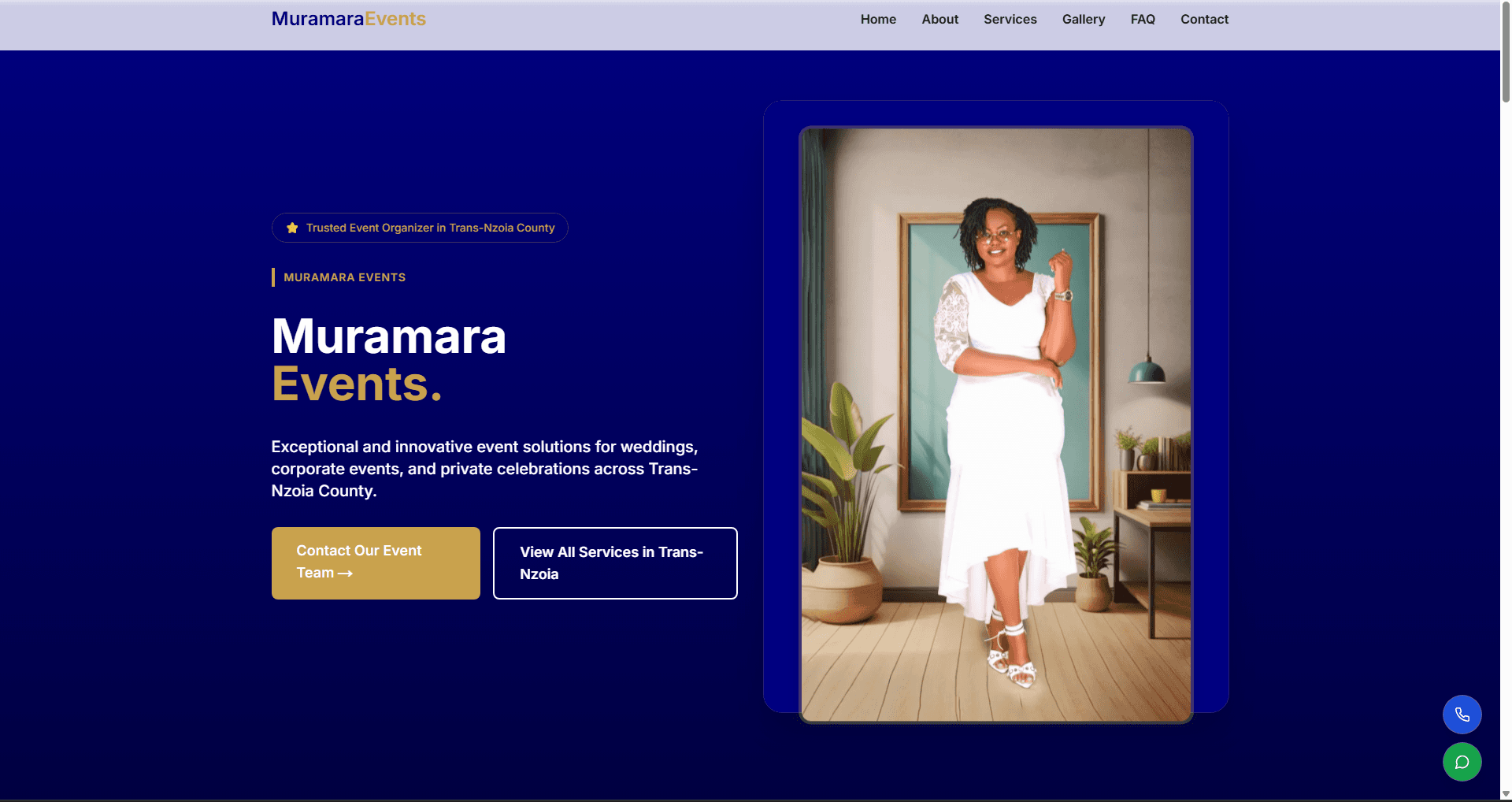
Murarama Events Platform is a full-stack web application built to power both the public brand experience and internal operations for an events business. On the public side, the app delivers a responsive, high-visual marketing site where visitors can explore services, gallery content, testimonials, and submit event inquiries. On the internal side, it provides a secure staff portal for authenticated users and a role-protected admin dashboard used to manage media assets, testimonials, marketing banners, and incoming leads in real time.
The project is built with Next.js (React + TypeScript) and Tailwind CSS, with Supabase handling authentication, database, storage, and security policies. Public pages dynamically consume structured content (hero images, carousel media, testimonials, and marketing banners) from Supabase, allowing non-developer admins to keep the site current without code changes. The architecture separates presentation from data access through reusable service modules (for media, testimonials, marketing, CRM, and users), making the codebase maintainable and easy to extend.
A key part of the implementation is robust data and API handling. The contact workflow uses a dedicated API route that validates payloads, sanitizes input, handles duplicate submissions, and gracefully supports schema evolution with fallbacks. Leads are persisted into a CRM table and surfaced in the admin dashboard with lifecycle status tracking, enabling a simple but effective sales pipeline. The admin experience includes media upload/reorder/toggle/delete flows, while access control is enforced at multiple layers: middleware guards, server-side role checks, and Supabase RLS/storage policies.
From a frontend engineering perspective, this app demonstrates practical production skills: component modularization, dynamic rendering from JSON-driven data, async server data fetching with resilient error handling, responsive design polish, and secure integration between UI and backend services. It reflects a modern workflow where rapid prototyping can be accelerated with AI tooling, then refined into clean, reliable, and production-quality React architecture.